 how-to
Avoiding Dog Ears After Liposuction: Prevention & Care
Table of Contents
- What Are Dog Ears After Liposuction?
- Why Dog Ears Occur: The Surgical Mechanics
- Surgical Techniques to Prevent Dog Ears During Liposuction
- Compression Garment Best Practices for Optimal Healing
- Liposuction Recovery Timeline: What to Expect Week by Week
- False Dog Ears vs. True Dog Ears: Understanding the Difference
- When to Consider Liposuction Revision Surgery for Dog Ears
- Non-Surgical Management: What You Can Do at Home
- Frequently Asked Questions
Last Updated: September 28, 2026
What Are Dog Ears After Liposuction?
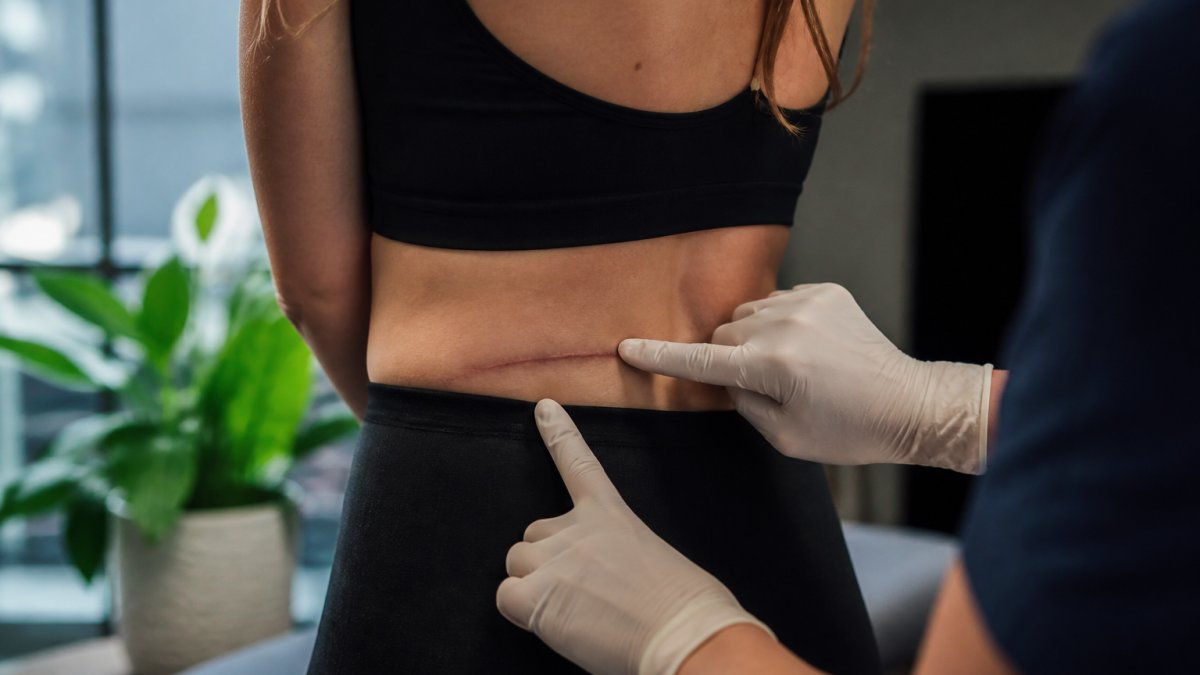
Dog ears are small pockets of excess skin that form at the ends of a liposuction incision, typically appearing where the incision meets the natural body contour. They look like small bunches or folds of skin sticking out from the treated area. The term comes from their resemblance to a dog's floppy ear. (Source: American Society of Plastic Surgeons' statistics)
Dog ears occur most commonly after abdominal liposuction and flank procedures. They're particularly visible when you're standing or moving. Many patients notice them weeks or months after surgery, once initial swelling goes down.
At Curved by Lipo, we focus on preventing dog ears from forming in the first place through careful surgical planning and precise incision placement. Understanding what causes them helps you know what to expect during recovery and when to discuss concerns with your surgeon.
Why Dog Ears Occur: The Surgical Mechanics
Dog ears happen because of how skin behaves during and after liposuction. When a surgeon removes subcutaneous fat from beneath the skin, the skin loses its support structure. The skin then needs to contract and conform to the new contours underneath.
At the ends of an incision, the skin sometimes can't contract evenly. This creates a small excess of skin tissue that bunches up. The problem gets worse if:
- Too much fat was removed in one area
- The incision was placed in the wrong location
- The surgeon didn't account for skin elasticity
- Post-operative swelling masked the true contours
The good news: many dog ears are actually "false dog ears." They're temporary puffiness from swelling and fluid retention, not permanent skin excess. True dog ears involve actual excess tissue that doesn't go away on its own.
Surgical Techniques to Prevent Dog Ears During Liposuction
Preventing avoiding dog ears after liposuction starts before the surgery even begins. The surgeon's approach during the procedure determines much of your outcome.
Incision Placement and Shape
The location and angle of your incision directly affect whether dog ears form. Surgeons who specialize in body contouring place incisions strategically:
- Position incisions in natural skin creases when possible
- Angle incisions to follow the body's natural contours
- Extend incisions slightly longer to distribute tension evenly
- Avoid placing incisions at the highest point of the treated area
A longer incision sounds worse, but it actually prevents dog ears by spreading the tension across more tissue. This allows skin to contract smoothly without bunching.
Tissue Debulking and Fat Removal Technique
How aggressively the surgeon removes fat affects skin contraction. Controlled, even fat removal allows the skin to settle naturally. Aggressive removal in one spot creates uneven tension.
Many surgeons use tumescent anesthesia, which involves injecting fluid into the treatment area. This technique allows precise fat removal under local anesthesia while the patient remains awake. Curved by Lipo uses this approach exclusively, giving surgeons better control and visibility during the procedure.
Skin Excision When Needed
For patients with significant excess skin, the surgeon may remove a small amount of skin during the procedure itself. This is called scar revision or scar lengthening. It sounds counterintuitive, but removing skin strategically prevents the bunching that causes dog ears.
The surgeon makes a small additional incision or extends the main incision slightly. This removes the excess tissue before it has a chance to fold. The trade-off is a slightly longer scar, but you avoid the bulging appearance of dog ears.
Compression Garment Best Practices for Optimal Healing
Compression garments are one of your most powerful tools for preventing dog ears and managing swelling. They work by applying consistent pressure that helps skin conform to new contours as it heals.
How Compression Helps
Compression garments:
- Reduce post-operative swelling that masks true contours
- Help skin contract evenly across the treatment area
- Prevent fluid buildup that causes false dog ears
- Support healing tissue and improve lymphatic drainage
- Keep skin in contact with underlying tissue as it settles
When to Wear Compression Garments
Start wearing your compression garment immediately after surgery. Most surgeons recommend wearing it 24 hours a day for the first 2-4 weeks. After that, you can wear it during the day only, or as needed for comfort.
Many patients find compression garments most helpful during the first 6-8 weeks. This is when swelling is highest and skin is actively contracting. Wearing compression during this critical window significantly reduces the chance of dog ears forming.
Choosing the Right Garment
Your surgeon will recommend a specific compression level, usually 20-30 mmHg for abdominal and flank procedures.
Signs your garment fits correctly:
- No gaps between the garment and your skin
- Smooth, even pressure across the treatment area
- You can fit one finger under the edge
- No red marks or indentation after removal
Liposuction Recovery Timeline: What to Expect Week by Week
Understanding your recovery helps you manage expectations about dog ears. Swelling changes dramatically over the first several weeks, which affects how your results look.
Weeks 1-2: Maximum Swelling
During this phase:
- Wear compression garments continuously
- Avoid strenuous activity
- Sleep with your head elevated to reduce fluid buildup
- Take prescribed medications as directed
- Attend all follow-up appointments
Weeks 3-4: Swelling Begins to Decrease
Weeks 5-8: Significant Improvement
Weeks 9-12 and Beyond
False Dog Ears vs. True Dog Ears: Understanding the Difference
Not all dog ears are permanent. Understanding the difference helps you know whether revision surgery is necessary.
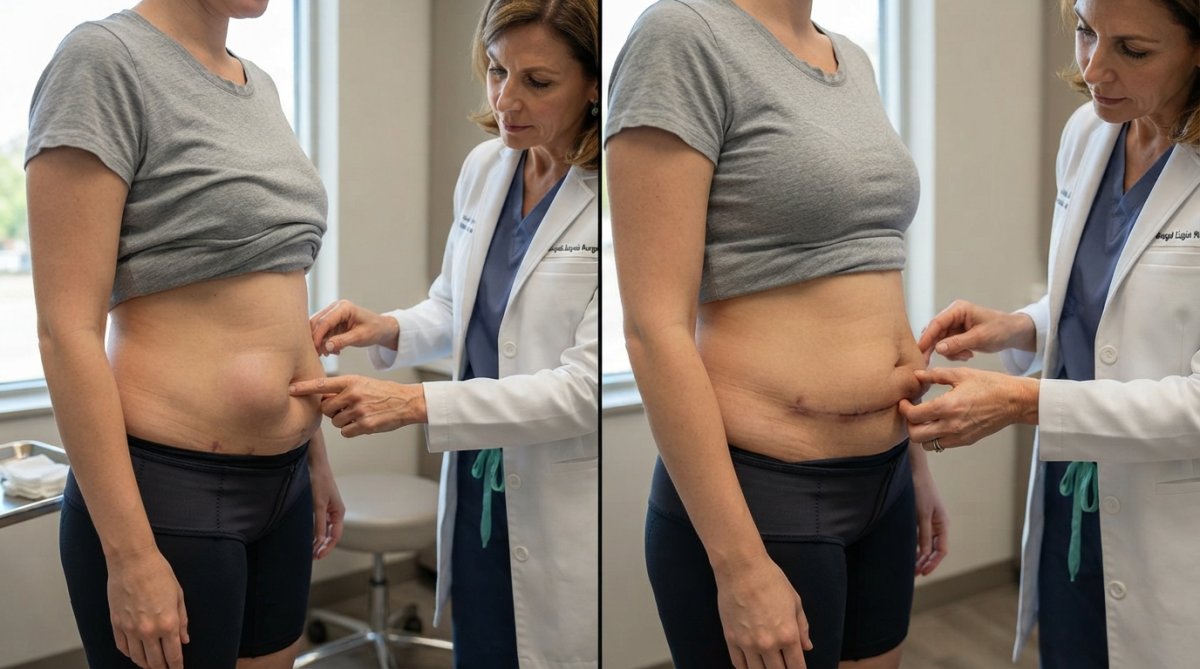
False Dog Ears: Temporary Swelling
Characteristics of false dog ears:
- Soft, moveable tissue
- Visible mostly in the first 4-8 weeks
- Decrease noticeably as swelling resolves
- Usually disappear completely by 12 weeks
- No firm tissue underneath
True Dog Ears: Permanent Excess Skin
Characteristics of true dog ears:
- Firm, fixed tissue
- Visible after swelling resolves (around week 8-12)
- Don't decrease in size over months
- Caused by excess skin at the incision end
- May require revision surgery to correct
How to Tell the Difference
When to Consider Liposuction Revision Surgery for Dog Ears
Revision surgery for avoiding dog ears after liposuction is a straightforward procedure. Most surgeons can correct true dog ears in 30-45 minutes under local anesthesia.
Who Needs Revision Surgery
You're a good candidate for revision if:
- You have true dog ears that persist beyond 12 weeks
- The dog ears bother you aesthetically
- You've completed your initial recovery
- You understand the revision will add a small scar
What Revision Surgery Involves
Timing for Revision
Non-Surgical Management: What You Can Do at Home
Before considering revision surgery, try these non-surgical approaches to managing dog ears and supporting healing.
Lymphatic Drainage and Massage
Massage technique:
- Wait until initial wound healing is complete (usually 2 weeks)
- Use gentle, circular motions moving away from the incision
- Massage for 5-10 minutes, once or twice daily
- Use light pressure only, never aggressive
- Stop if you experience pain or increased swelling
Elevation and Positioning
Helpful positioning:
- Sleep with your torso elevated on 2-3 pillows
- Avoid lying flat for the first 2-3 weeks
- Don't lean forward or bend at the waist excessively
- Take frequent walking breaks to promote circulation
- Avoid crossing your arms over your abdomen
Hydration and Nutrition
Activity and Exercise
Gradually increase activity as you heal:
- Weeks 1-2: Short walks only
- Weeks 3-4: Longer walks, light stretching
- Weeks 5-6: Gentle exercise, avoiding core work
- Weeks 7-8: Return to normal activity as tolerated
Scar Care
Scar care options:
- Silicone scar sheets reduce redness and flatten scars
- Vitamin E oil and other topical treatments may help
- Avoid sun exposure to incision areas for at least 12 months
- Massage scars gently once fully healed to improve texture
Frequently Asked Questions
What exactly are dog ears after liposuction?
Dog ears are small pockets of excess skin and tissue that can form at the ends of liposuction incisions, typically appearing as small bunching or puckering. They occur when the skin at the incision edges doesn't retract evenly or when there is excess tissue remaining after fat removal. Some dog ears are temporary (false dog ears caused by swelling) and resolve within weeks; others are permanent (true dog ears) and may require revision surgery. The appearance varies from barely noticeable to more pronounced, depending on surgical technique, individual skin elasticity, and post-operative care.
Can proper compression garment use prevent dog ears?
Compression garments play a significant role in preventing or minimizing dog ears by supporting skin retraction and reducing post-operative swelling. Wearing compression garments consistently during the recommended recovery period helps the skin conform to the new body contours and improves lymphatic drainage. However, compression alone cannot prevent dog ears caused by surgical technique or inherent tissue characteristics. The combination of proper surgical planning, correct incision placement, compression garment compliance, and careful post-operative care offers the best chance of avoiding them.
How long should I wait before deciding if a dog ear will resolve on its own?
Most false dog ears, those caused by post-operative swelling and temporary tissue puffiness, resolve within 3 to 6 months as swelling decreases and skin continues to retract. It is recommended to wait at least 6 months before considering revision surgery, as the final surgical outcome may not be fully apparent until then. During this time, consistent compression garment use and proper wound care accelerate healing. If dog ears persist after 6 months and cause aesthetic concern, a consultation with your surgeon can determine whether they are true dog ears suitable for revision.
What is the difference between false dog ears and true dog ears?
False dog ears are temporary pockets caused by post-operative swelling and tissue edema that resolve naturally as healing progresses, usually within 3 to 6 months. True dog ears are permanent tissue redundancy that results from excess skin or fat remaining at the incision site and do not resolve without intervention. True dog ears may require revision surgery involving scar lengthening or additional tissue excision. Distinguishing between them requires patience during recovery and professional assessment; your surgeon can help determine which type you have and recommend appropriate next steps.