 how-to
Awake Liposuction Recovery: Timeline & What to Expect
Table of Contents
- Understanding Awake Liposuction Recovery Basics
- The First 72 Hours: What Happens Immediately After Surgery
- Awake Liposuction Swelling Timeline: Days 4 Through 6 Weeks
- Can I Go Back to Work After Liposuction? Activity and Work Guidelines
- Post-Liposuction Activity Restrictions: What You Need to Avoid
- Liposuction Recovery Tips for Faster Healing
- Warning Signs and When to Contact Your Surgeon
- Frequently Asked Questions
Last Updated: September 27, 2026
Understanding Awake Liposuction Recovery Basics
Awake liposuction recovery refers to the healing process after cosmetic fat removal performed under local tumescent anesthesia while you remain fully conscious. Unlike traditional liposuction that requires general anesthesia, awake procedures minimize many post-operative complications and typically involve shorter recovery timelines. (Source: American Society of Plastic Surgeons' statistics)
The key difference lies in how your body responds. General anesthesia suppresses your system for hours, creating additional stress and inflammation. Local anesthesia keeps you alert and comfortable while your body heals faster. This means less bruising, less swelling, and a quicker return to normal activities for most patients.
At Curved by Lipo, we perform all procedures using the tumescent technique under local anesthesia. This approach eliminates the side effects associated with general anesthesia, nausea, drowsiness, and prolonged disorientation, so your recovery starts the moment you leave our facility.
Understanding what happens in each recovery phase helps you prepare mentally and physically. The first week is critical. Your body begins tissue healing immediately, inflammation peaks around day three, and most patients feel ready for light desk work by day five or six. But individual timelines vary based on the extent of fat removal, your age, overall health, and how well you follow post-operative care instructions.
The First 72 Hours: What Happens Immediately After Surgery
The immediate post-operative period determines your entire recovery trajectory. The first three days are when your body's inflammatory response peaks, swelling accelerates, and proper care prevents complications.
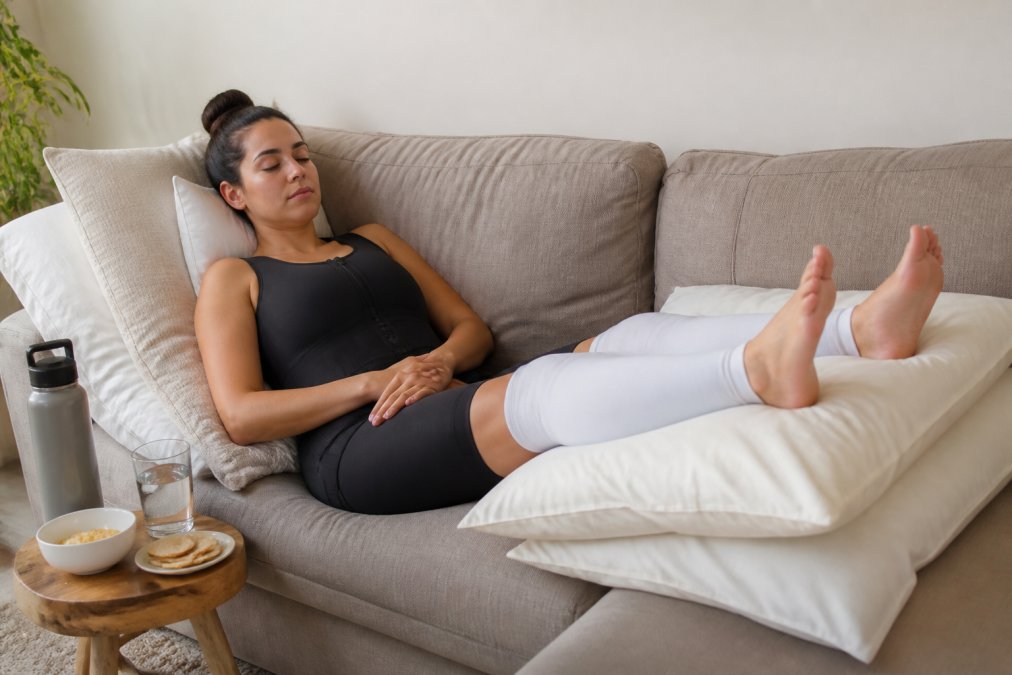
Right after your procedure, you'll feel alert and aware. You can walk out on your own or with minimal support. This is one of the major advantages of awake liposuction, no grogginess, no post-anesthesia confusion. However, your body is actively healing beneath the surface.
What to expect in hours 0-24:
- Mild to moderate soreness at incision sites and treated areas
- Swelling begins immediately and increases through day two
- Bruising appears within the first 12 hours
- Numbness or tingling in treated areas (normal nerve response)
- Fatigue from the body's healing efforts
- Drainage from compression garment (this is normal)
Days 2-3 specifics:
Swelling peaks around day three. This is not a sign of problems, it's your body's natural inflammatory response. Compression garments work hardest during this window, so wear them consistently. Many patients find days two and three more uncomfortable than day one because swelling creates pressure and soreness intensifies.
Hydration and rest are non-negotiable. Drink water constantly. Dehydration slows healing and increases swelling. Sleep with your head and treated areas elevated on pillows. This reduces fluid accumulation overnight.
Light movement helps. Short walks around your home promote circulation without stressing incision sites. Avoid bending, lifting, or any activity that increases blood pressure.
Awake Liposuction Swelling Timeline: Days 4 Through 6 Weeks
Awake liposuction swelling follows a predictable pattern. Understanding this timeline prevents panic when swelling doesn't disappear overnight, it's part of normal healing.
Days 4-7: Swelling plateaus or decreases slightly. Bruising darkens and spreads. This looks worse than it feels. Most patients feel significantly better emotionally because the worst inflammation has passed. You can shower normally now, though you'll still wear your compression garment most of the day.
Week 2: Visible improvement begins. Swelling drops noticeably. Bruising fades from dark purple to yellow-green. You can move more freely, though soreness remains when you overdo activity. This is when many patients feel tempted to resume exercise, resist this urge.
Weeks 3-4: Roughly 50% of swelling resolves by week four. Bruising becomes minimal. You can wear regular clothes comfortably. Compression garment use drops to nights only or as-needed. Incision sites heal visibly. Light exercise becomes appropriate for most patients.
Weeks 5-6: Swelling continues declining slowly. Most patients see 70-80% of final results by week six. Residual puffiness remains but is barely noticeable to others. Full compression garment use typically ends.
Weeks 7-12: The final 20-30% of swelling resolves gradually. Subtle puffiness may persist, especially in the morning or after salt intake. Scar tissue begins remodeling. Final aesthetic results emerge slowly.
The timeline varies significantly. Patients who follow compression garment protocols, stay hydrated, and avoid strenuous activity heal faster. Those who push activity limits experience prolonged swelling.
Can I Go Back to Work After Liposuction? Activity and Work Guidelines
Can I go back to work after liposuction? Yes, most patients return to desk work within 5-7 days. However, "going back" doesn't mean full capacity immediately.
Days 1-3: No work. Rest and recovery are your only jobs. If you have a desk job, this is still not the time. You'll be uncomfortable, fatigued, and unable to concentrate. Your body needs energy for healing, not mental tasks.
Days 4-7: Desk work only. No meetings that require you to stand for hours. No client presentations where you need to be "on." Sitting increases swelling slightly, so take breaks hourly to move around. Avoid any tasks requiring focus or decision-making under pressure, your brain fog is real.
Week 2: Full desk work resumes. You can attend meetings, handle normal workload, and manage your usual responsibilities. Soreness decreases enough that you forget about it for stretches of time. Compression garment is barely noticeable under regular clothes.
Week 3 onward: Normal work capacity. No restrictions. Physical jobs require longer timelines (see activity restrictions section).
The key variable is your job type. A surgeon or nurse cannot return to work for 2-3 weeks.
Post-Liposuction Activity Restrictions: What You Need to Avoid
Post-liposuction activity restrictions exist because physical exertion increases swelling, disrupts healing, and can cause complications like hematoma or seroma formation.
Weeks 1-2, Strict rest:
- No lifting anything heavier than 10 pounds
- No bending at the waist or twisting your torso
- No strenuous walking or hiking
- No swimming or hot tubs (infection risk from open incisions)
- No sexual activity
- No driving if you're taking pain medication
- No sleeping on your stomach or side (sleep on your back)
Weeks 3-4, Light activity only:
- Walking 15-20 minutes daily is encouraged
- Light stretching is acceptable
- No running, jumping, or high-impact exercise
- No weights or resistance training
- No contact sports
- No heavy lifting (over 20 pounds)
Weeks 5-6, Moderate activity:
- Brisk walking and light cardio approved
- Stationary cycling at low resistance
- Gentle yoga
- Still no heavy lifting or intense exercise
- No activities that cause sweating or rapid heart rate
Week 7 onward, Normal activity:
Liposuction Recovery Tips for Faster Healing
Healing speed depends on factors you control. Follow these evidence-based practices to optimize your recovery timeline.
Warning Signs and When to Contact Your Surgeon
Most awake liposuction recoveries proceed smoothly. However, certain symptoms warrant immediate professional attention.
Contact your surgeon immediately if you experience:
- Fever above 101°F, sign of infection
- Excessive bleeding or drainage that soaks through compression garment repeatedly
- Severe pain unrelieved by prescribed medication
- Increasing redness, warmth, or pus at incision sites
- Shortness of breath or chest pain
- Severe swelling in one area that doesn't improve with elevation and compression
- Numbness that spreads or persists beyond two weeks
- Signs of seroma (fluid pocket): soft, moveable bulge under skin that doesn't decrease with compression
Contact within 24 hours for:
- Mild fever (100.5-101°F)
- Persistent nausea or vomiting
- Difficulty urinating
- Allergic reaction to medication (rash, itching, swelling)
- Questions about medication or activity restrictions
These are normal and don't require contact:
- Bruising that darkens before fading
- Mild swelling that increases slightly after activity
- Numbness in treated areas for 4-6 weeks
- Occasional sharp, shooting sensations as nerves heal
- Tightness or firmness under skin
- Temporary color changes in skin (redness, purple, yellow)
Frequently Asked Questions
Why do I look bigger or more swollen 3 weeks after awake liposuction?
Post-operative swelling peaks around days 3-7 and gradually resolves over weeks. At 3 weeks, you may still have significant inflammation as your body heals the surgical sites. Wearing compression garments and following activity restrictions helps manage this swelling. The tissue continues healing beneath the surface, and final results typically emerge after 6-8 weeks as inflammation subsides. This is a normal part of the recovery process, not a sign that the procedure failed.
How long should I wear compression garments after awake liposuction?
Most surgeons recommend wearing compression garments continuously for the first 2-3 weeks, then during the day for an additional 2-4 weeks. Compression supports the healing tissue, reduces swelling, and helps your body achieve optimal contouring results. Your surgeon will provide specific guidance based on the extent of your procedure and your individual healing response. Consistent use during this period significantly impacts both comfort and final aesthetic outcomes.
What should I eat and drink to help my body heal faster after liposuction?
Stay well-hydrated by drinking at least 8-10 glasses of water daily to support lymphatic drainage and tissue healing. Eat protein-rich foods like chicken, fish, and eggs to rebuild tissue. Include foods high in vitamin C (citrus, berries) and zinc (nuts, seeds) to support collagen formation and wound healing. Avoid excess sodium, alcohol, and processed foods, which can increase inflammation and swelling. Proper nutrition directly supports faster tissue repair and better recovery outcomes.
Can I sleep normally after awake liposuction, or do I need special positioning?
Sleep positioning matters during early recovery. For the first 1-2 weeks, sleep with your head elevated on 2-3 pillows to reduce facial and upper body swelling. Avoid sleeping on your stomach or directly on treated areas. Side sleeping is acceptable if it doesn't put pressure on surgical sites. After the first 2 weeks, you can gradually return to your normal sleep position as swelling decreases. Proper positioning reduces discomfort and supports the healing process.