 how-to
Liposuction Under Local Anesthesia: Recovery Timeline
Table of Contents
- What Happens During Liposuction Under Local Anesthesia
- Day-by-Day Recovery Timeline After Local Anesthesia Liposuction
- Can I Go Back to Work After Liposuction Under Local Anesthesia
- Managing Pain and Swelling During Recovery
- Tumescent Liposuction Recovery Tips for Faster Healing
- Compression Garment Requirements and Proper Wear
- Warning Signs and When to Contact Your Surgeon
- Conclusion
- Frequently Asked Questions
Last Updated: September 21, 2026
What Happens During Liposuction Under Local Anesthesia
When you choose local tumescent anesthesia, you remain fully awake while your surgeon injects a solution containing local anesthetic (typically lidocaine) and epinephrine directly into treatment areas, numbing the surgical site. (Source: American Society of Plastic Surgeons' 2026 statistics)
The tumescent technique injects dilute anesthetic solution into the fat layer, causing tissue to firm and swell for easier, safer removal. You can communicate with your surgeon about comfort throughout.
The procedure typically takes one to three hours. Your surgeon uses a thin cannula to break up and suction fat cells. You avoid grogginess, nausea, and general anesthesia complications.
At Curved by Lipo, we specialize in this awake approach. Our team performs liposuction, abdominoplasty, breast augmentation, and fat transfers exclusively under local tumescent anesthesia. This method prioritizes your safety while delivering optimal cosmetic results with minimal downtime.
Day-by-Day Recovery Timeline After Local Anesthesia Liposuction
Your liposuction under local anesthesia recovery time follows a predictable pattern. Understanding what to expect each day helps you prepare mentally and physically for the healing process ahead.
Days 1-3: Immediate Post-Operative Period
The first three days are critical for managing swelling and discomfort. You'll go home the same day. Most patients report mild to moderate soreness, similar to intense exercise, with bruising and swelling peaking around day two or three.
During this period:
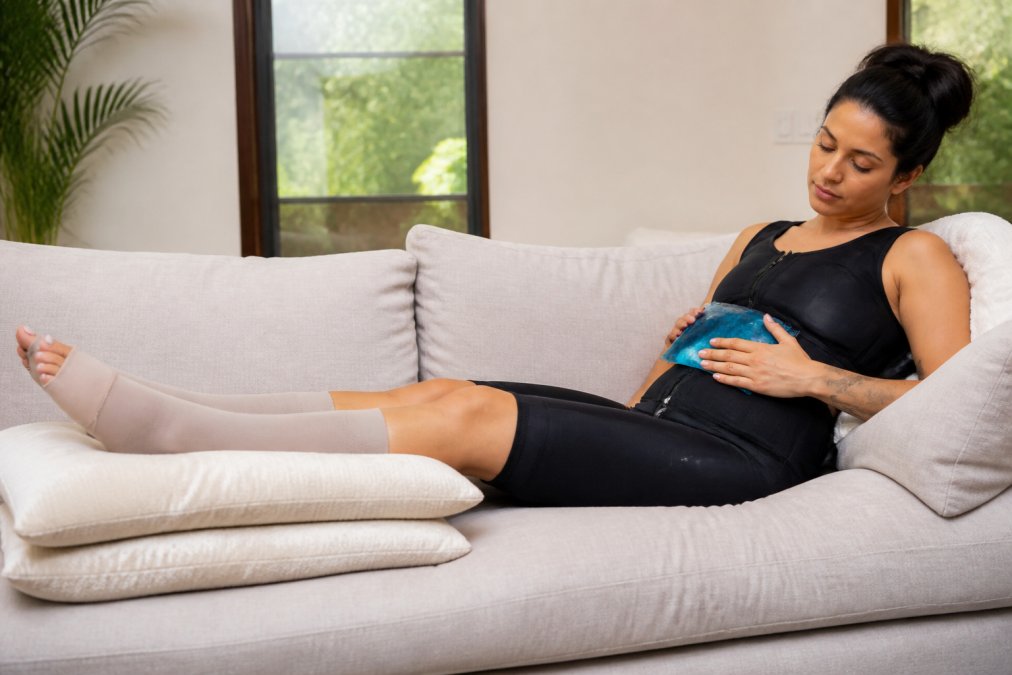
- Wear your compression garment continuously (even while sleeping)
- Rest and elevate treated areas when possible
- Take prescribed pain medication as directed
- Apply ice packs for 15-20 minutes at a time, several times daily
- Drink plenty of water to support healing
- Avoid strenuous activity and heavy lifting
Because you weren't sedated, your body doesn't need to recover from anesthesia side effects, meaning less nausea and faster mental clarity. By day three, most people feel ready for light household tasks but should avoid work or exercise.
Days 4-7: First Week Healing
Swelling decreases during week one, though bruising may worsen before fading (peaking around day five or six).
During week one:
- Continue wearing compression garments for at least 23 hours per day
- Start light walking to promote circulation (10-15 minutes, several times daily)
- Gradually reduce ice use as swelling improves
- Continue taking pain medication if needed (most patients stop by day five)
- Avoid bending, lifting, or twisting motions
- Do not submerge incision sites in water (showers are fine; baths are not)
Many patients return to desk work by day five or six. Jobs requiring physical activity or heavy lifting must wait longer. Staying hydrated and moving gently accelerates lymphatic drainage and fluid reabsorption.
Weeks 2-4: Gradual Return to Activity
By week two, most swelling subsides and early contours appear, though final results take months. Bruising fades noticeably by this point.
During weeks two through four:
- Reduce compression garment wear to 12-16 hours per day (typically during the day)
- Increase walking duration to 20-30 minutes daily
- Resume light stretching and gentle yoga
- Return to desk work and light activity
- Avoid high-impact exercise, running, and heavy weight training
- Do not sleep on treated areas if possible
Most people return to normal work routines by week two with baseline energy levels. Sexual activity can typically resume around week two, avoiding positions that pressure treated areas.
Weeks 5-8: Continued Improvement
By week five, swelling is minimal and bruising faint or gone. Most people resume regular exercise by week six.
During weeks five through eight:
- Wear compression garments only at night (optional but helpful)
- Resume all forms of exercise, including running and weight training
- Return to all normal activities without restriction
- Continue staying hydrated and eating well to support final healing stages
- Expect continued subtle improvement in contours
Final results develop through month three. Removed fat cells don't return, but remaining cells enlarge with weight gain. Maintain diet and exercise to preserve results.
Can I Go Back to Work After Liposuction Under Local Anesthesia
Return to work depends on your job type. Most people underestimate how quickly they can resume work with local anesthesia versus general anesthesia.
Desk jobs: Return by day three to five. Sitting doesn't stress healing tissues. Plan to take it easy your first day back despite mental clarity.
Jobs requiring standing or walking: Return by week two. Light movement promotes circulation; avoid prolonged standing until week three.
Physical jobs: Wait until week four to six. Bending, lifting, and repetitive motion increase swelling and risk seroma formation.
Client-facing roles: Consider comfort with visible bruising. Most fades by week two, but some lingers. Plan extra time off if appearance matters.
Local anesthesia avoids post-anesthesia grogginess, making mental work easier. However, mental clarity doesn't mean physical healing is complete. Rest is still essential; pushing too hard increases swelling and bruising.
Managing Pain and Swelling During Recovery
Pain and swelling are manageable with the right approach during liposuction under local anesthesia recovery time.
Your surgeon may inject long-acting anesthetic extending numbness 12-24 hours (pubmed.ncbi.nlm.nih.gov). Most patients take prescribed medication three to seven days, then switch to ibuprofen. Take ibuprofen consistently every six hours for the first week rather than waiting until pain peaks.
Apply ice packs for 15-20 minutes, then remove for 15-20 minutes during the first 72 hours to reduce inflammation. After day three, heat supports circulation.
Swelling peaks around day two or three, then gradually decreases over weeks two through four. Residual swelling can linger two to three months.
Minimize swelling by wearing compression garments, elevating treated areas, staying hydrated (80+ ounces daily), avoiding salt/alcohol/caffeine, moving gently, and sleeping elevated. Movement encourages lymphatic drainage and reduces swelling.
Tumescent Liposuction Recovery Tips for Faster Healing
Tumescent liposuction recovery tips focus on supporting your body's natural healing processes. These practical strategies help you recover faster and achieve better results.
Eat lean protein at every meal and include vitamin C-rich foods (citrus, berries, peppers) to support tissue rebuilding. Avoid processed foods and excess sugar.
Compression Garment Requirements and Proper Wear
Compression garments are essential during liposuction under local anesthesia recovery time. Understanding how to wear them properly maximizes their benefit.
Wear schedule:
- Days 1-7: Wear 23-24 hours per day (remove only for showering)
- Weeks 2-4: Wear 12-16 hours per day (typically during waking hours)
- Weeks 5-8: Wear at night only (optional but beneficial)
Care and maintenance:
- Hand wash in cool water with mild soap
- Air dry completely before wearing again
- Replace if elastic loses stretch (typically after 3-4 months of regular use)
- Have at least two garments so one is always clean
Warning Signs and When to Contact Your Surgeon
Most liposuction under local anesthesia recoveries proceed smoothly. However, knowing warning signs helps you catch complications early.
Contact your surgeon immediately if you experience:
- Excessive bleeding that doesn't slow with pressure after 20 minutes
- Severe pain that doesn't improve with prescribed medication
- Signs of infection: fever over 101°F, increasing redness, warmth, or pus from incisions
- Chest pain or difficulty breathing (rare but serious)
- Severe swelling that worsens after day three or appears suddenly in one area
- Numbness or tingling that spreads beyond the treated area
- Signs of seroma: soft, fluid-filled bulge under the skin that doesn't improve by week four
Common concerns that are usually normal:
Conclusion
Liposuction under local anesthesia offers a faster recovery path than general anesthesia procedures. By understanding your day-by-day recovery timeline and following evidence-based healing strategies, you can minimize discomfort and achieve optimal results. The first two weeks require the most attention, consistent compression garment wear, gentle movement, and proper pain management set the foundation for smooth healing.
Frequently Asked Questions
How painful is liposuction under local anesthesia?
During the procedure, local anesthesia with lidocaine and epinephrine numbs the surgical site, so you should not feel sharp pain, only pressure and vibration from the cannula. After surgery, discomfort typically ranges from mild to moderate and responds well to over-the-counter pain medication. The first 48 hours are usually the most uncomfortable, but pain decreases significantly by day 5-7. Because you avoid general anesthesia, you also avoid grogginess and nausea, which can compound post-operative discomfort.
Can I go back to work after liposuction under local anesthesia?
Most patients return to desk work within 3-5 days after local anesthesia liposuction. If your job is sedentary and you can keep treated areas elevated, you may return sooner. Jobs requiring heavy lifting, standing for long periods, or strenuous activity should wait until week 3-4. Recovery is faster than with general anesthesia because you avoid sedation side effects. However, you must wear your compression garment during work and follow your surgeon's activity restrictions to minimize swelling and ensure optimal results.
Why do I look bigger 3 weeks after liposuction?
Swelling and fluid retention peak around days 3-5 and persist for 2-3 weeks after liposuction. This edema makes treated areas appear larger than the final result. Compression garments help control swelling, but it resolves gradually as your lymphatic system drains excess fluid. By week 4-6, you'll notice visible improvement. Final results typically appear after 8-12 weeks when all swelling has resolved. Patience during this phase is essential, the size you see at three weeks is not your permanent outcome.
What are the worst days after liposuction under local anesthesia?
Days 1-3 are typically the most uncomfortable, with peak pain and swelling. You may experience bruising, soreness, and tightness from the compression garment. Days 4-7 bring gradual improvement, though you'll still feel restricted. Avoid strenuous activity during this window. By week 2, most patients feel significantly better and can resume light activity. Staying hydrated, following compression garment protocol, and taking prescribed or recommended pain medication helps you get through the worst days more comfortably.